Building a Home in WA or ID? Your 2026 Construction Loan Guide
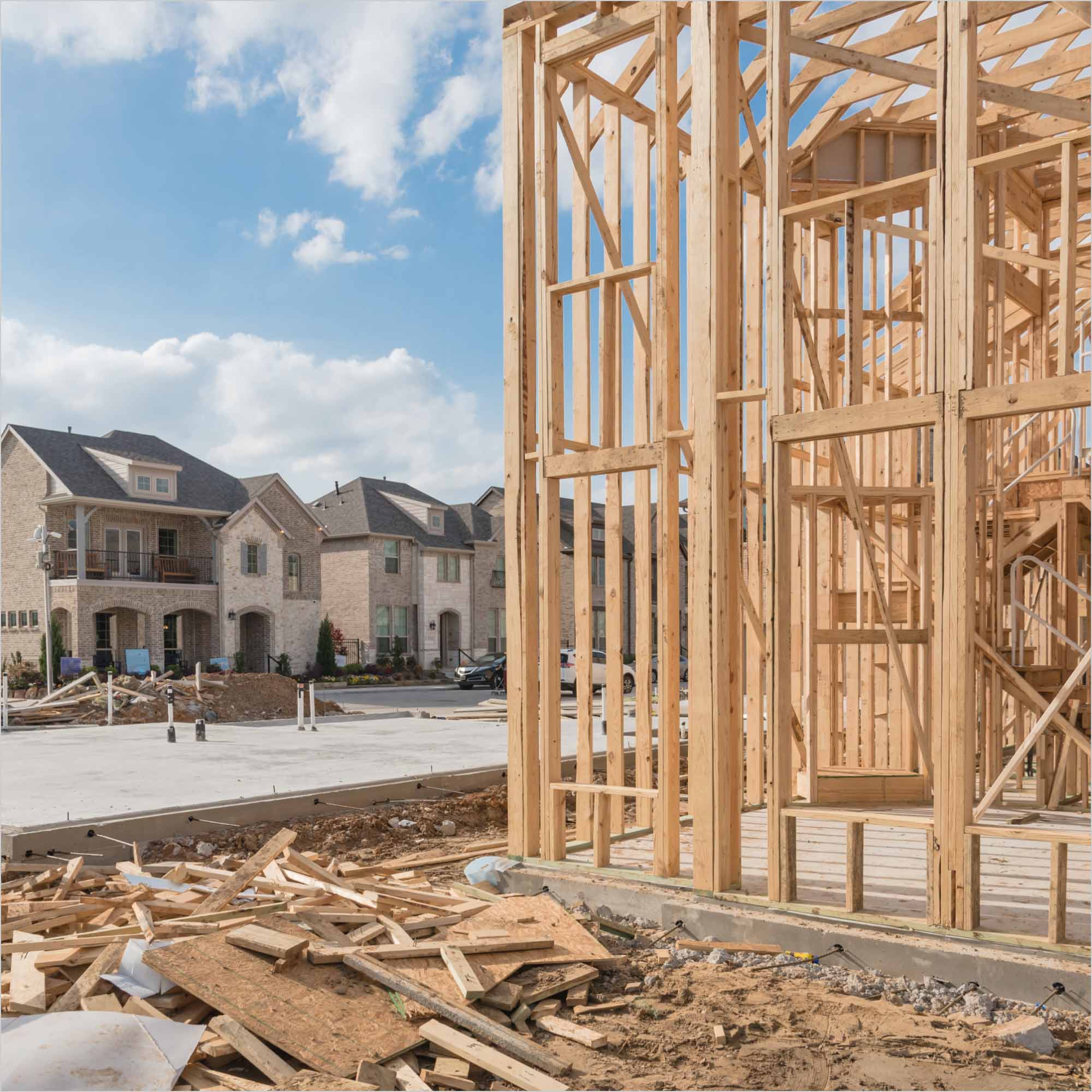
Building a custom home in Washington or Idaho lets you create exactly what you want in exactly the location you choose. But financing new construction works differently than buying an existing home. Here's what you need to know about construction loans in the Pacific Northwest.
How Construction Loans Work
Construction loans fund the building of a home rather than the purchase of an existing one. They operate fundamentally differently from traditional mortgages:
Draw Schedule
Instead of disbursing the full loan amount at closing, construction loans release funds in "draws" as construction progresses. Typical milestones include:
- Land/foundation
- Framing
- Mechanical (plumbing, electrical, HVAC)
- Interior finishes
- Final completion
Each draw requires inspection verification that the work is complete before funds are released.
Interest-Only During Construction
During the construction period, you pay only interest on the amount drawn—not the full loan amount. If your construction loan is $500,000 and $150,000 has been drawn, you pay interest on $150,000.
Conversion to Permanent Financing
After construction completes, the loan must convert to permanent financing. This happens in one of two ways:
- One-Time Close (OTC): A single loan covers both construction and permanent financing. You lock your rate upfront, close once, and automatically convert to your permanent mortgage at completion.
- Two-Time Close: Separate construction and permanent loans. More flexibility but two sets of closing costs and rate uncertainty for the permanent loan.
Construction Loan Requirements
Down Payment
Construction loans typically require 10-20% down based on the completed value (land + construction costs). If you own the land free and clear, that equity may count toward your down payment.
Credit Score
Most construction lenders require 680+ credit scores. Some programs work with 660+ for strong files.
Builder Requirements
Lenders vet your builder carefully. Requirements typically include:
- Licensed and insured contractor
- Experience with similar projects
- References and portfolio
- Financial stability
Plans and Specifications
You'll need complete architectural plans, detailed construction specifications, a fixed-price contract with the builder, and a budget breakdown by construction phase.
Types of Construction Loans
Construction-to-Permanent (One-Time Close)
One application, one approval, one closing. You know your permanent rate before breaking ground. Most efficient for borrowers who want certainty.
Construction-Only (Two-Time Close)
Separate construction loan that pays off with a new permanent mortgage at completion. More flexibility but more complexity and cost.
Owner-Builder Loans
For borrowers acting as their own general contractor. Requirements are stricter—lenders want proof you have construction experience and can manage subcontractors effectively.
Renovation Construction Loans
Existing home purchase plus substantial renovation financed in a single loan. Works like new construction with draws for renovation milestones.
Building in Washington vs. Idaho
Washington State Considerations
- Building permits vary significantly by county and city
- Energy code requirements (WA State Energy Code) impact construction costs
- Septic and well permits add time in rural areas
- Some areas have lengthy permitting timelines
Idaho Considerations
- Generally faster permitting, especially in rural areas
- Less stringent energy code requirements in some jurisdictions
- Growing builder demand in Coeur d'Alene area means scheduling challenges
- Fire-wise construction requirements in some mountain communities
Construction Loan Scenarios
Scenario 1: Custom Home on Owned Land — A couple owns five acres in Stevens County, WA, free and clear ($150,000 value). They want to build a $450,000 home. Land equity counts as down payment, and they need $450,000 construction financing. Total completed value: $600,000.
Scenario 2: Land Purchase Plus Construction — First-time buyers purchasing 2 acres near Post Falls for $120,000 and building a $380,000 home. Total project: $500,000. With 15% down ($75,000), they finance the land purchase and construction in a single one-time close loan.
Scenario 3: Tear-Down and Rebuild — Existing home on desirable lot in Spokane's South Hill. The home has no value, but the lot is worth $200,000. Borrowers want to demolish and build $600,000 new construction. Land equity counts toward down payment on an $800,000 total project.
Construction Loan Timeline
- Months 1-2: Pre-qualification — Get pre-approved before finalizing plans or builder contracts
- Months 2-4: Plans and Permits — Finalize architectural plans, get builder bids, submit for permits
- Months 4-5: Loan Approval — Submit complete loan package including plans, specs, contracts, and permit approvals
- Month 5-6: Closing — Close the construction loan, make initial draw for foundation work
- Months 6-18: Construction — Build the home with draws at each milestone
- Month 18+: Completion — Final inspection, certificate of occupancy, conversion to permanent financing
Tips for Successful Construction Financing
- Get pre-approved early — Know your budget before designing the home
- Choose your builder carefully — Lender-approved builders streamline the process
- Build in contingency — Cost overruns happen; budget accordingly
- Lock your rate strategically — One-time close locks upfront; two-time close locks later
- Plan for timeline delays — Weather, materials, inspections all create delays
After construction, your permanent loan may be a conventional loan, VA loan (if eligible), FHA loan, or jumbo loan depending on the loan amount and your eligibility.
Is Building Right for You?
Building a custom home offers control over design, location, and features that existing homes can't match. But it requires more patience, planning, and often more capital than purchasing existing construction.
If you're considering building in Washington or Idaho, let's discuss your project scope, budget, and timeline. Understanding your financing options before you design helps ensure the home you envision is the home you can build.
Share this article
About the Author
Marcus Vogt is a mortgage loan officer at Q Home Loans, dedicated to helping families achieve their homeownership dreams.
Meet Our Team